Why Choose a Gumball Sweet Machine for Your Business?
Why Choose a Gumball Sweet Machine for Your Business?
A Gumball Sweet Machine can turn unused floor space into a small, visible sales channel. It needs limited electricity, little staff attention, and a compact footprint. These practical advantages matter in cafés, family entertainment centers, cinemas, and retail entrances. The machine also creates a simple customer experience: insert payment, turn the handle, and receive a colorful treat.
Market data supports the wider vending concept. Fortune Business Insights valued the global vending machine market at approximately USD 21.3 billion in 2022. Its report projects growth to about USD 37.2 billion by 2030. This trend reflects continued demand for convenient, self-service purchasing. Meanwhile, the National Confectioners Association’s 2024 industry research reports that more than 90% of Americans enjoy candy occasionally. That finding suggests strong emotional familiarity with small confectionery purchases, although it does not guarantee sales for every location.
Location remains decisive. A machine beside a checkout queue may perform better than one hidden near a storage area. Transparent containers, clean surfaces, visible pricing, and reliable coin mechanisms can build trust within seconds. Food handling and labeling requirements still deserve careful review. Local rules may differ.
Small details matter.
Experience also exposes a weakness: novelty can fade quickly. Operators should track weekly sales, refill frequency, product preferences, and maintenance time. A Gumball Sweet Machine is not automatic profit. It becomes a dependable business asset only when placement, hygiene, pricing, and customer demand are tested honestly. A short trial may reveal more than optimistic projections.
What Is a Gumball Sweet Machine?
Why Choose a Gumball Sweet Machine for Your Business?
What Is a Gumball Sweet Machine?
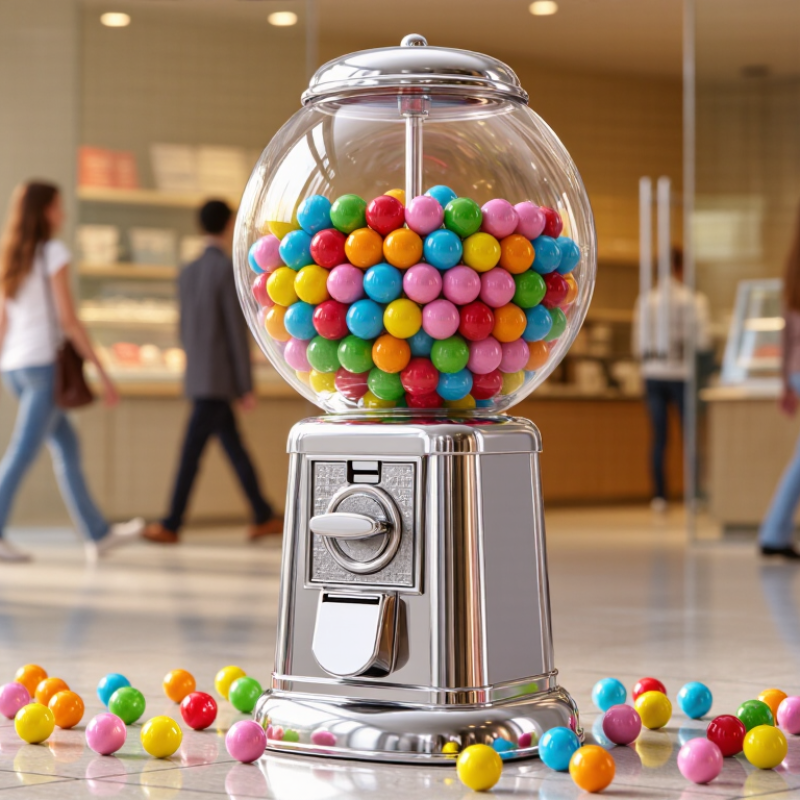
A gumball sweet machine is a coin-operated dispenser for small sweets, usually placed near entrances, counters, or waiting areas. It uses a transparent globe, a turning handle, and a portion-control mechanism. Customers insert payment, rotate the handle, and receive one measured serving. The process takes seconds.
Unlike staffed sales, this machine needs limited floor space and little daily labor. It can also create a small impulse purchase beside checkout areas. The National Automatic Merchandising Association reported $31.1 billion in United States convenience-services sales in its 2023 State of the Industry report. That figure covers broader vending services, not gumball machines. Still, it shows continued interest in unattended purchasing. Grand View Research also identifies impulse buying as an important factor in the global confectionery market.
The machine is simple, but placement is not. A busy family venue may outperform a quiet office corridor. Operators should track sales, refill timing, product freshness, and coin collection. A transparent globe makes low stock visible. That detail matters. One weakness remains: poor cleaning or an awkward location can quickly reduce trust.
Tips: Measure the available floor space before installation. Choose sealed, individually handled sweets where practical. Record weekly sales for eight weeks. Review the data honestly. The best location may surprise you.
Why Choose a Gumball Sweet Machine for Your Business?
What Is a Gumball Sweet Machine? It is a coin- or cashless-operated dispenser that sells individual sweets. The chart compares illustrative monthly sales scenarios using a $1 vend price, a $0.25 sweet cost per vend, and 30 operating days per month.
“After sweet costs” is gross sales minus the cost of sweets only. It does not include the machine, location fees, payment processing, tax, or maintenance. Actual results depend on sales volume and costs.
How Does a Gumball Sweet Machine Work?
A gumball sweet machine works through gravity and a measured dispensing mechanism. Sweets sit in a clear hopper above a rotating wheel or chamber. After a customer inserts payment and turns the handle, the mechanism aligns an opening with the hopper. A small portion drops into the space, then moves toward the chute as the handle completes its turn. The sweets land in the tray below. The motion is simple.
That controlled movement can help limit waste, but portion size depends on the wheel, sweet dimensions, and machine adjustment. Jams can happen. Uneven pieces may block the outlet, so an operator should test several turns and check that the handle returns smoothly. Keeping the hopper clean and dry also helps the sweets feed consistently. If the level gets too low, the wheel may not fill as expected. Payment systems and suitable sweet sizes vary between machines, so check the specifications before choosing one for a busy counter. A little trial and error may still be needed.
What Business Benefits Does It Offer?
A gumball sweet machine can turn a few square feet into a small, unattended sales point. Place it near a checkout, family waiting area, or community entrance, where customers have time to notice it. Bright sweets behind a clear globe make the offer easy to understand. Small, visible, and simple.
The National Confectioners Association’s 2024 State of Treating report put U.S. confectionery sales at about $48 billion in 2023. NAMA’s 2023 State of the Industry report estimated U.S. convenience-services revenue at $26.6 billion that year, across vending and related formats. These figures describe broad markets, not guaranteed returns from one machine. Still, they show that vending and confectionery are established parts of everyday retail.
For a business, the practical benefits are modest setup needs, flexible placement, and sales beyond staffed hours. Choose sturdy, easy-to-clean equipment, then track refills and coin collections against the machine’s location. A simple sales log can reveal whether the corner by the door beats the waiting area. Small warning: a coin can jam, and an empty globe looks neglected. Check stock regularly, and test different spots before assuming the machine will pay for itself.
Which Locations Suit a Gumball Sweet Machine Best?
A gumball sweet machine works best where people pause, not merely pass by. Family cafés, bowling alleys, and indoor play areas can offer that useful mix: steady visitors, a little waiting time, and adults nearby. Place the machine where children can see it, but keep walkways and exits clear. Small details matter. A bright, tidy unit beside a seating area may attract more attention than one hidden behind a door.
Laundromats, barbershops, and family-friendly waiting rooms can also suit a machine. Customers often have a few spare minutes, and the machine needs little floor space. Check the surroundings before choosing a spot: is it easy to reach, visible from the counter, and away from heat or damp? A machine in a convenience store may benefit from checkout traffic, though crowded entrances can make it awkward. Busy isn't always better.
Think about who visits and how long they stay. A location with families may fit sweet products, while a quieter venue might see fewer impulse purchases. Ask the site manager about cleaning, refills, and who will handle jams; these practical tasks are easy to overlook. A machine can look appealing and still sell little. Track sales for a few weeks, then reconsider its placement if customers rarely stop.
How Can Businesses Manage Stock, Pricing, and Maintenance?
Why Choose a Gumball Sweet Machine for Your Business?
A gumball sweet machine can turn unused floor space into a simple retail opportunity. In my experience, the best results come from placing it near queues, entrances, or family seating areas. Customers notice it while waiting. Keep the machine visible, clean, and easy to reach.
Stock management needs a small routine. Check the container every few days, especially during weekends or school holidays. Record which sweets sell quickly and which remain untouched. Rotate older stock forward and keep sealed supplies in a cool, dry cabinet. Never refill a machine with damaged, expired, or unlabelled products. This sounds obvious. It is still often missed.
Pricing should reflect product cost, refill time, payment fees, and local customer expectations. A clear price label prevents awkward conversations at the counter. Review the price after supplier costs change, rather than guessing. Follow local rules for food labelling, hygiene, and vending equipment. A simple sales sheet can track daily takings and refill quantities, although manual records may contain mistakes. Check them against cash regularly.
Maintenance protects both sales and customer trust. Wipe contact surfaces daily and deep-clean the dispensing area on a fixed schedule. Inspect the coin mechanism, seals, locks, and turning handle each week. Test for jams before opening, not after a customer complains. Replacement parts should be stored nearby. Even with careful checks, a machine may occasionally fail, so staff need a clear process for refunds and fault reporting.
Why Choose a Gumball Sweet Machine for Your Business? — How Can Businesses Manage Stock, Pricing, and Maintenance?
| Management Area |
Metric or Control |
Example Planning Figure |
Practical Action |
| Stock |
Machine capacity |
Use the machine’s stated capacity; for planning, assume a 1,000-piece unit. |
Confirm capacity and product compatibility in the equipment specifications before ordering stock. |
| Stock |
Reorder point |
Example: reorder when about 25% of the planned fill remains (250 pieces in a 1,000-piece example). |
Adjust the trigger to delivery lead time and observed sales so the machine is less likely to run empty. |
| Stock |
Stock tracking |
Record opening quantity, refills, and estimated sales at every service visit. |
Compare the count with cash or payment records to spot unusual losses or counting errors. |
| Pricing |
Vend price |
A sample test range is $0.25–$0.50 per vend; local prices and product size vary. |
Check nearby alternatives and customer response, and confirm that the mechanism supports the selected payment amount. |
| Pricing |
Gross margin per vend |
Example only: a $0.50 vend less $0.12 product cost leaves $0.38 before other expenses. |
Include location fees, payment fees, taxes, waste, and servicing costs when assessing profitability. |
| Pricing |
Price review |
Review sales and costs monthly, or whenever supplier prices or location terms change. |
Change one factor at a time and track the result to understand its effect on sales and margin. |
| Maintenance |
Routine inspection |
Inspect during each restock visit; set visit frequency according to sales, site conditions, and the equipment manual. |
Check for jams, loose parts, damage, cleanliness, and correct dispensing. |
| Maintenance |
Cleaning and food handling |
Follow the machine and product instructions; keep a dated cleaning and service log. |
Use suitable cleaning methods and protect sweets from moisture, dirt, and direct contamination. |
| Maintenance |
Fault response |
Log the date, fault, action taken, and any out-of-service time. |
Keep the machine secure and follow the manufacturer’s guidance for repairs; do not use damaged equipment. |