Top 10 Commercial Soda Machines for Global Buyers
Choosing the right commercial soda machine can shape service speed, drink quality, and daily operating costs. For global buyers, the decision involves more than appearance or advertised capacity. Water conditions, power standards, carbon dioxide supply, counter space, and local servicing can change the buying experience.
This guide examines the Top 10 Commercial Soda Machines for Global Buyers through practical operating factors. We consider carbonation consistency, cooling performance, dispensing speed, cleaning access, energy use, and installation requirements. A busy café may need fast refills during lunch hours, while a hotel could value quiet operation and flexible beverage options. Small details matter.
Real-world suitability matters most.
The strongest Soda Machines are not always the largest or most expensive models. A compact unit may perform well in a bakery but struggle in a high-volume food court. Buyers should review manufacturer documentation, warranty coverage, replacement-part availability, and applicable safety certifications before purchasing. These checks support more reliable decisions across different markets.
Some comparisons remain imperfect. Manufacturers may measure output under different conditions, making direct capacity claims difficult to verify. Actual performance can also depend on water temperature, operator habits, and maintenance quality. That uncertainty deserves attention. We highlight both useful strengths and practical limitations, helping distributors, restaurants, hotels, and catering teams compare equipment with clearer expectations. Each model deserves a closer look before a final commitment.
Commercial Soda Machine Types and Their Main Uses
Commercial Soda Machine Types and Their Main Uses
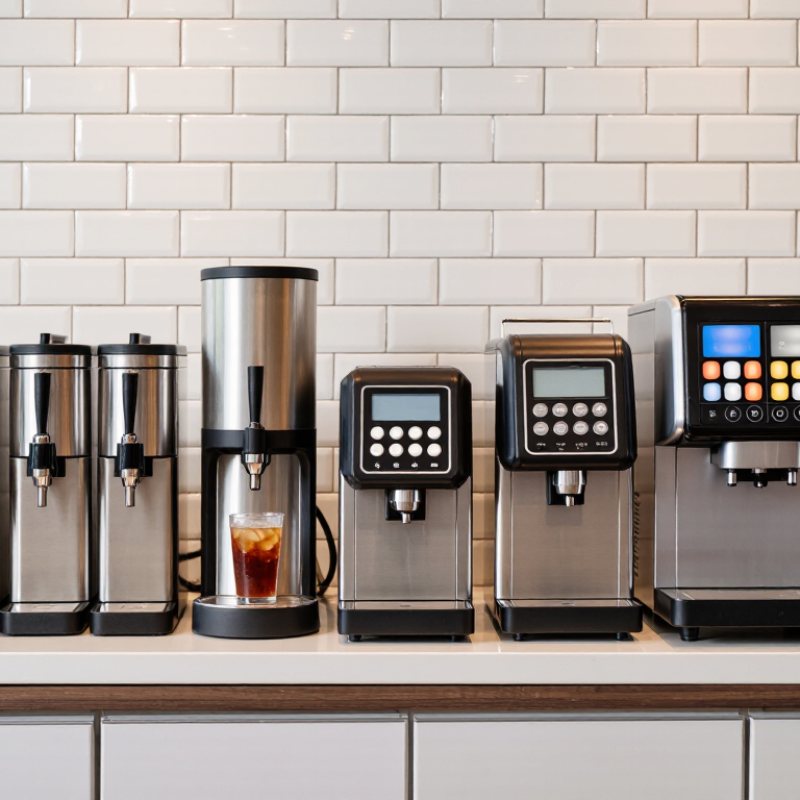
Commercial soda machines serve different operating needs, from compact cafés to busy food courts. Post-mix dispensers blend carbonated water, syrup, and ice at the point of sale. They suit restaurants with steady drink orders and several flavor choices. These systems save storage space, but they need accurate syrup ratios and stable water pressure.
Pre-mix machines use ready-made beverages stored in containers. They are simple to operate and useful at events, small counters, and temporary service areas. Staff can serve drinks quickly with limited setup. Countertop fountain units fit cafés and convenience stores where floor space is limited. Larger modular systems work better in cinemas, hotels, and high-volume dining rooms. Space matters.
Carbonation units add carbon dioxide to chilled water. They support custom drink programs and reduce dependence on pre-carbonated stock. However, carbonation quality can vary with water temperature, gas pressure, and maintenance. Colder water usually holds gas more effectively. This detail is easy to overlook.
In practical service planning, I match machine type with peak demand, cleaning capacity, and available utilities. A high-output dispenser may underperform if drainage or refrigeration is inadequate. Operators should check syrup connections daily and clean nozzles regularly. Water filtration can improve taste, though filter replacement costs need attention. Sometimes, the cheaper setup becomes expensive through waste and repairs. That deserves a second look.
Top 10 Commercial Soda Machines for Global Buyers
Commercial Soda Machine Types and Their Main Uses
The chart compares typical peak output benchmarks in 12-ounce servings per hour. Post-mix fountain systems and modular beverage dispensers are generally suited to restaurants, food courts, cinemas, and high-volume venues, while vending machines, soda guns, and countertop units are better for smaller or decentralized service points. Actual capacity varies with carbonation rate, ice supply, water pressure, syrup configuration, and operating conditions.
Key Features to Compare Across Global Markets
When comparing the top 10 commercial soda machines, global buyers should look beyond serving speed.
Local voltage, water pressure, climate, and technician access can change real performance. IEA’s The Future of Cooling reports that cooling demand could more than triple by 2050. Energy efficiency is not optional. Check standby consumption, insulation quality, compressor control, and heat rejection before comparing purchase prices. Small savings matter.
Dispensing capacity should match peak traffic, not average sales.
Review ice-bank size, carbonation recovery time, syrup ratio control, and the number of simultaneous pours. A busy counter needs stable temperature after repeated use. Look for food-contact materials supported by recognized sanitation standards, such as NSF/ANSI requirements where applicable. Water filtration also deserves attention. Hard water can shorten valve life and affect flavor. Operators should confirm filter availability in the destination market.
Maintenance details often reveal machine quality.
Tool-free panel access, clear cleaning instructions, and replaceable pump components reduce service delays. In humid regions, drainage design and corrosion resistance deserve extra scrutiny. In colder markets, freeze protection may be more important than maximum cooling output. This is where many comparisons become too simple. A specification sheet cannot predict every installation. Ask for tested flow rates, noise data, warranty response times, and service documentation. According to UNEP’s Global Cooling Watch 2023, stronger cooling efficiency is essential as global cooling demand rises. Yet efficiency claims should be checked under comparable test conditions, not accepted blindly.
Top 10 Commercial Soda Machines for Different Business Needs
Commercial soda machines should match the business, not simply the available budget. A small café may need a compact countertop dispenser with two or three flavor lines. It saves space behind a narrow service counter. A busy restaurant needs a high-flow post-mix system, reliable cooling, and quick cup filling during lunch hours. The right output capacity prevents long queues and inconsistent service.
Self-service stations require different priorities. A clear interface, spill-resistant drip tray, and easy-to-clean nozzles improve customer use. Hotels and food courts may prefer modular systems with several flavor options and simple refill access. Mobile caterers often need compact equipment, secure fittings, and manageable power requirements. Ice-making capacity also matters when drinks must stay cold without slowing service.
Water quality affects taste, carbonation, and maintenance. A suitable filtration system can reduce mineral buildup, but it cannot replace regular cleaning. Operators should check syrup ratios, gas pressure, tubing condition, and refrigeration performance during routine inspections. Local electrical, food-safety, and installation rules must guide the final purchase. No machine is perfect. A high-capacity model may waste space in a quiet café, while a compact unit may struggle during peak demand. Buyers should record hourly sales, counter dimensions, cleaning time, and service access before choosing equipment. That practical review often reveals needs that product brochures overlook.
Installation, Maintenance, and Operating Requirements
Top 10 Commercial Soda Machines for Global Buyers
Installation, Maintenance, and Operating Requirements
Commercial soda machines need more than a nearby power socket. Leave clearance around the condenser, keep the unit level, and install a dedicated water filter when local water contains heavy sediment. The U.S. FDA Food Code 2022 sets 5°C (41°F) or below for cold-held safety-sensitive foods. Soda is different, but this benchmark shows why stable cooling matters. Water pressure must match the technical sheet. Too much pressure can cause foaming, leaks, or uneven carbonation.
Cleaning schedules should be written, not remembered. Sanitize nozzles, diffusers, drip trays, and syrup connectors daily in busy locations. Replace filters according to water volume, not only calendar dates. NSF/ANSI 18 addresses manual food and beverage dispensing equipment, including sanitation-related design expectations. That standard is useful during purchasing, but certification should still be verified for the exact model.
The World Health Organization estimates 600 million people become ill from contaminated food each year. A neglected dispensing valve can become a quiet hygiene risk. Check beverage temperature, carbonation, syrup ratio, and leak points at opening. Record the readings. Staff often clean visible parts while missing hidden connectors. That mistake is common. Global buyers should also confirm voltage, plug type, drainage, local water quality, and technician availability before shipment. Energy use deserves attention too; an oversized cooling system may waste power during low-demand hours, and this is easy to overlook.
Buying Considerations for International Customers
Top 10 Commercial Soda Machines for Global Buyers
Buying Considerations for International Customers
Choosing among the top ten commercial soda machine types requires more than comparing output figures. Post-mix dispensers suit restaurants with steady drink sales, while compact countertop units fit cafés with limited space. High-volume fountain systems serve busy food courts. Undercounter models preserve counter space. Modular carbonators allow easier upgrades. Self-service units need clear controls and spill-resistant surfaces. Bottle and can machines require less water infrastructure. Carbonated-water dispensers serve hotels and offices. Portable units help temporary events. Multi-flavor systems improve menu flexibility.
Electrical compatibility is a practical concern. Confirm voltage, frequency, plug type, and power load before ordering. A machine designed for one grid may need approved adaptation elsewhere. Check water pressure, filtration requirements, drain access, and local water quality. Hard water can damage valves and reduce carbonation. In humid climates, cooling performance matters. Ask for documented food-contact materials, electrical testing, and installation instructions in a usable language. Certification requirements differ by destination, so local verification remains essential.
Total cost includes freight, customs handling, spare parts, technician travel, and downtime. Request a packing list with dimensions and gross weight. Measure doors, elevators, and service clearances. During a previous comparison, I focused too heavily on cooling capacity and missed the cost of replacement pumps. That mistake changed the final ranking. A reliable supplier should provide wiring diagrams, maintenance intervals, warranty terms, and remote support. Shorter warranties are not always unacceptable, but unclear service procedures are a warning sign. Test sample syrup ratios and carbonation levels before committing to a large shipment.