What Are the Best Soda Machines from China?
Choosing the best Soda Machines from China requires more than comparing prices and glossy product photos. The right model must produce consistent carbonation, fit the intended space, and remain easy to clean. A café may need a compact countertop unit, while a hotel or restaurant may require higher output and stronger cooling performance. Small details matter, such as nozzle design, bottle height, filter access, and the sound of the compressor during busy service.
Chinese manufacturers offer a broad range of commercial and household Soda Machines. Some specialize in sparkling water dispensers, while others build complete systems for cafés, offices, and hospitality venues. Experienced buyers should examine stainless-steel contact parts, carbonation pressure controls, cooling speed, and replacement component availability. Factory audits, product samples, and clear technical documents can reveal more than a low quotation. Certifications and testing records should also match the destination market and intended use.
Not every affordable machine is a smart purchase. A lower price may hide weaker pumps, limited after-sales support, or difficult maintenance. That concern deserves attention. Performance claims should be checked through practical testing, including repeated dispensing, temperature recovery, and cleaning procedures. Reliable suppliers explain warranty terms, installation requirements, packaging protection, and response times. This guide compares important machine types, evaluates manufacturer credibility, and highlights realistic selection criteria. The final choice should balance output, durability, operating costs, and user experience rather than relying on appearance alone. Experiences may differ. Careful verification remains essential.
Soda Machine Types Made in China: Carbonators, Dispensers, and Vending Units
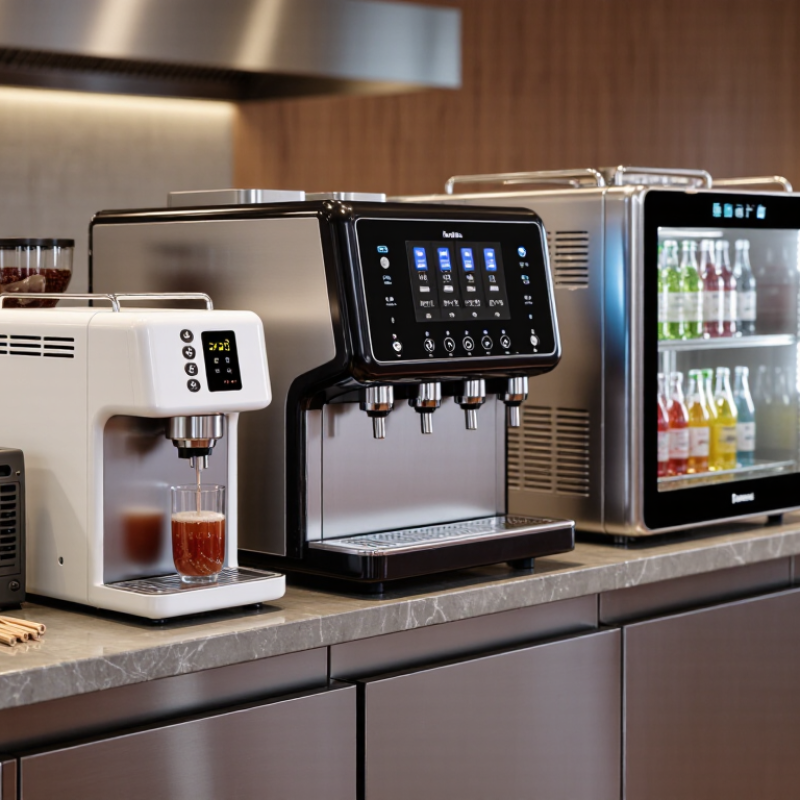
China-made soda machines generally fall into three practical categories: carbonators, dispensers, and vending units. Carbonators mix treated water with CO2 inside a compact chamber. They suit cafés, restaurants, and office pantries with steady daily demand. Dispensers add chilled water, syrup, and carbonation through separate controls. Operators can adjust cup size and syrup ratios, although poor calibration creates flat drinks or excessive sweetness.
Grand View Research reported that the global carbonated soft drinks market reached about USD 318.8 billion in 2022. This demand supports wider equipment sourcing, but beverage volume alone should not determine a purchase. During evaluation, check cooling recovery, CO2 pressure stability, food-contact tubing, and cleaning access. Small details matter. A removable drip tray can save considerable maintenance time. I would also request water-quality requirements in writing, because vague specifications often create avoidable service problems.
Vending units made in China combine cooling, payment interfaces, product storage, and remote monitoring. Allied Market Research valued the global vending machine market at USD 51.9 billion in 2021 and projected USD 146.6 billion by 2031. That growth suggests strong commercial potential, but outdoor installation demands more than an attractive cabinet. Inspect insulation, compressor performance, door seals, electrical protection, and software update procedures. Factory demonstrations can look perfect. Real locations are less forgiving. Before ordering, test a sample unit under local temperature, voltage, water, and usage conditions. Even then, some judgment remains imperfect.
What Are the Best Soda Machines from China? – Soda Machine Types Made in China: Carbonators, Dispensers, and Vending Units
| Soda Machine Type | Primary Function | Typical Output Capacity | Drink Options | Carbonation Method | Typical Installation | Key Advantages | Main Limitations | Best Use Case |
|---|---|---|---|---|---|---|---|---|
| Countertop Carbonator | Mixes chilled water with carbon dioxide to produce carbonated water or soda. | Approximately 30–120 liters per hour, depending on cooling and carbonation configuration. | Carbonated water, flavored soda, sparkling beverages, and selected syrup mixtures. | Direct CO2 injection through a carbonator pump and mixing chamber. | Indoor countertop or compact service counter; usually connected to a water supply and CO2 cylinder. | Compact footprint, relatively simple operation, lower installation requirements, and suitable for small-volume service. | Lower peak output than commercial dispensers; requires regular cleaning of water and syrup-contact components. | Cafes, restaurants, offices, hotels, and small beverage counters. |
| Commercial Carbonator | Produces a continuous supply of chilled carbonated water for beverage dispensing systems. | Approximately 120–600 liters per hour, depending on ice bank, pump, and cooling capacity. | Carbonated water and multiple syrup-based soft drinks when connected to a dispensing tower. | High-pressure CO2 injection with an electric carbonator pump and refrigerated water circuit. | Back-of-house installation in restaurants, food-service areas, bars, and beverage production rooms. | Higher continuous capacity, stable carbonation, and compatibility with multi-flavor beverage systems. | Needs more space, electrical power, water filtration, drainage planning, and trained maintenance. | High-volume food service, hospitality venues, event catering, and beverage counters. |
| Post-Mix Beverage Dispenser | Dispenses chilled carbonated water and concentrated syrup in a controlled ratio at the point of sale. | Approximately 100–500 servings per hour, depending on the number of valves and cooling system. | Multiple soft drinks, flavored sparkling water, soda water, and sometimes still water. | Uses carbonated water supplied by an internal or external carbonator. | Countertop, freestanding, or modular installation in front-of-house service areas. | Offers several flavors from one unit, supports fast self-service, and reduces the need to store finished beverages. | Requires syrup containers, CO2, water filtration, sanitation, and correct syrup-to-water calibration. | Restaurants, cinemas, cafeterias, convenience stores, and quick-service locations. |
| Self-Service Soda Dispenser | Allows customers or staff to select and dispense chilled beverages through push buttons or a touchscreen. | Approximately 80–300 servings per hour, depending on user traffic and cooling performance. | Carbonated soft drinks, sparkling water, still water, and multiple flavor selections. | Internal or external carbonator supplies carbonated water to the dispensing valves. | Indoor floor-standing or counter-mounted installation near dining or service areas. | Improves service speed, supports portion control, and can reduce staff workload. | Touchscreens and dispensing valves need frequent sanitation; customer-facing units require careful hygiene management. | Buffets, dining halls, food courts, hotels, and institutional catering. |
| Soda Vending Machine | Stores and sells packaged or freshly dispensed beverages without continuous staff assistance. | Approximately 100–500 packaged servings per refill cycle, or 100–300 dispensed servings per day in typical locations. | Packaged cans and bottles; some models also offer freshly mixed carbonated beverages. | Packaged products require no carbonation system; fresh-dispensing models use CO2 and a carbonator. | Indoor or sheltered outdoor placement with stable electricity, ventilation, and customer access. | Automated sales, extended operating hours, digital payment compatibility, and reduced direct labor. | Requires inventory replenishment, payment-system maintenance, security planning, and temperature control. | Transit areas, campuses, offices, hospitals, factories, gyms, and public facilities. |
| Fresh-Mix Soda Vending Unit | Filters water, carbonates it, mixes it with syrup, and dispenses a beverage on demand. | Approximately 100–300 cups per day, depending on water supply, cooling capacity, and customer traffic. | Customizable carbonated drinks, flavored sparkling water, and adjustable sweetness levels. | On-demand carbonation using a CO2 cylinder, carbonator pump, and chilled water system. | Indoor installation with a water connection, drainage or waste tank, electrical power, and ventilation. | Reduces packaged-beverage storage, allows recipe customization, and can provide fresh drinks at the point of sale. | More complex sanitation, water-quality control, syrup management, and service procedures than packaged-product vending. | Shopping centers, entertainment venues, campuses, self-service beverage stations, and retail locations. |
| Industrial Carbonation and Filling System | Carbonates beverages and fills them into bottles, cans, or other approved containers for commercial production. | Typically 1,000–30,000 liters per hour, depending on line configuration and filling speed. | Carbonated water, soft drinks, flavored sparkling beverages, and selected low-viscosity drinks. | Inline carbonation using controlled CO2 dosing, chilling, and pressure management. | Dedicated production facility with utilities, water treatment, compressed air, drainage, and packaging equipment. | High throughput, repeatable carbonation, automated process control, and integration with filling and labeling lines. | High capital cost, complex commissioning, specialized operators, and strict cleaning requirements. | Beverage manufacturers, contract packers, and large-scale production facilities. |
| Capacity figures are typical application ranges rather than guaranteed specifications. Actual performance depends on water temperature, cooling method, CO2 pressure, syrup ratio, power supply, sanitation procedures, and local installation conditions. | ||||||||
Related Posts
-

Global Market Insights on Soda Stream Machine Trends for 2025 and Beyond
-
Navigating the Future of Wellness with Ultimate Guide to Best Healthy Vending Machines by 2025
-

Health-Conscious Innovations in Vending Machines: Trends to Watch by 2025
-

Future Innovations in Capsule Dispensing Technologies and Essential Approaches for Global Buyers
-

Maximizing Your Investment: The Cost-Effectiveness of Vending Coin Machine Maintenance and Support Strategies
-
How to Choose the Best Toy Candy Machine for Kids?